Category: 18th Century Dog Art

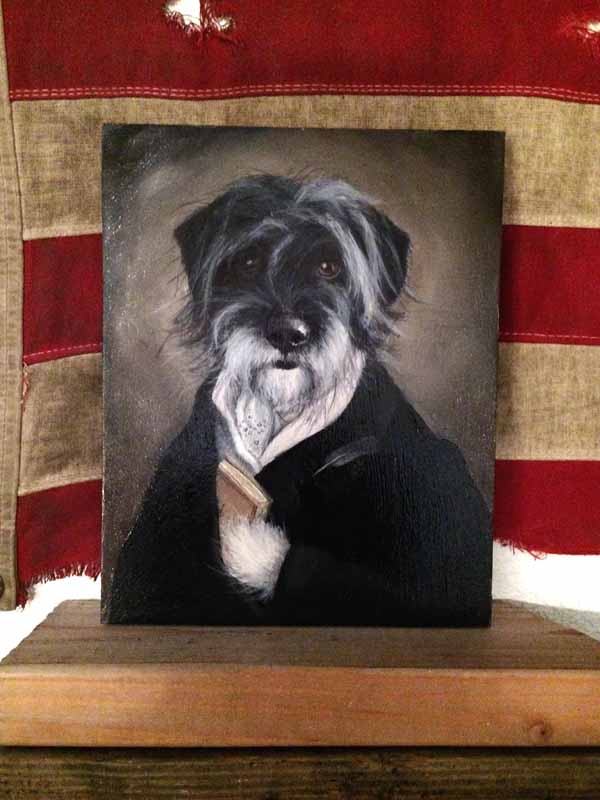
  • Tyler Foote by Clair Hartmann


    Tyler-Foote-by-Clair-Hartmann-600


    Tyler Foote by Clair Hartmann, 2014

    North Carolina artist and DAT favorite, Clair Hartmann was so inspired by Tyler Foote Finds: A Compendium of My Ignorance, she asked for a trade: a print of the installation and a DANK Koan in return for one of her imaginary realism portraits of Footey.

    Of course my answer was yes. Clair's portrait of my beloved Darby (1994 – 2011) is one of my treasured possessions, my screen saver, and it was featured in "Modern Dog Magazine."

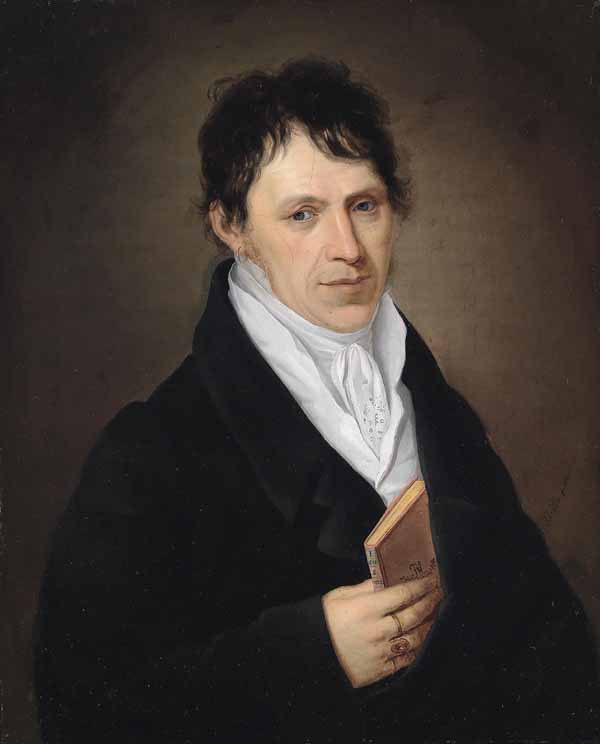
    Clair's Tyler Foote portrait pays homage to his passion for nature by representing him as Alexander Von Humboldt (1769 – 1859) Prussian explorer, naturalist, and father of botanical and field biogeography…
     

    Alexander_von_Humboldt,_by_Franz_Xaver_Kleiber


    Alexander von Humboldt by Franz Xaver Kleiber


    I adore it.

    Visit Clair Hartmann's website to commission a portrait of your pet, either classic or imaginary realism style.

    She offers a 25% discount for anyone who works for a non-profit animal rescue and gift certificates for the holidays are available.

    Her Chumley Calendar, a celebration of her own pup, is a gorgeous cross-section of her styles.  Order it here.

    Thank you, Clair.

    xo, Moira and Tyler Foote

    P.S. Watch a brief TED Talk lesson on Alexander von Humboldt, the most famous person you never heard of.  Clair's painting may help give him the recognition he deserves.
  • In The Company of Dogs and Cats at Blanton Museum of Art


    Toulouse-Lautrec_L'Artisan-Modern-1896
     
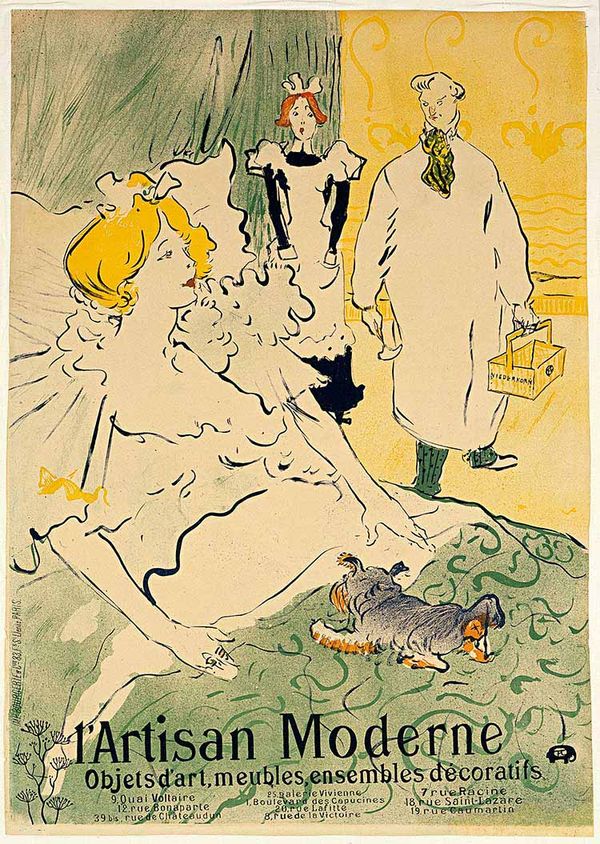
    L’Artisan Moderne Poster by Henri Toulouse-Lautrec, 1896

    Now on view at the Blanton Museum of Art at The University of Texas at Austin, In the Company of Dogs and Cats, featuring over 150 works by masters such as Albrecht Dürer, Jean-Honoré Fragonard, William Blake, Francisco Goya, Paul Gauguin, Takahashi Hiroaki (Shotei), Pablo Picasso, Henri Cartier-Bresson, Edward Hopper, Louise Bourgeois, and others.

    The museum is keeping most of the included works out of the press, but shared L'Artisan Moderne Poster by Henri Toulouse-Lautrec. I've never seen it before. Wonder what other dog-art treasures they have? If you go, let me know.
    Exhibition runs until September 21, 2014.

    Visit Blanton Museum of Art for more information.

  • NYC Dog-Art Tour


    Howling_canine_metropolitan_museum_art


    Howling Canine, 5th or 6th Century Mexican Ceramic at the Met

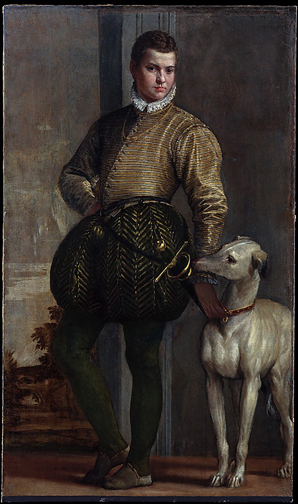
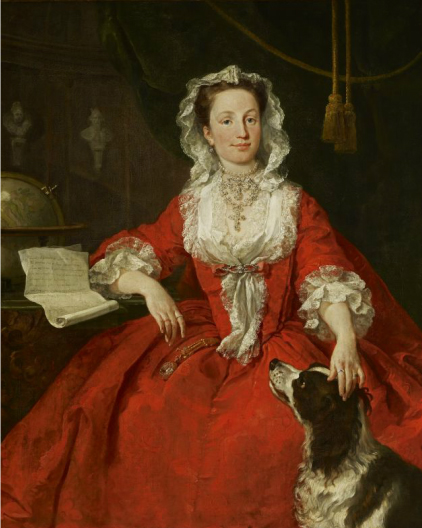
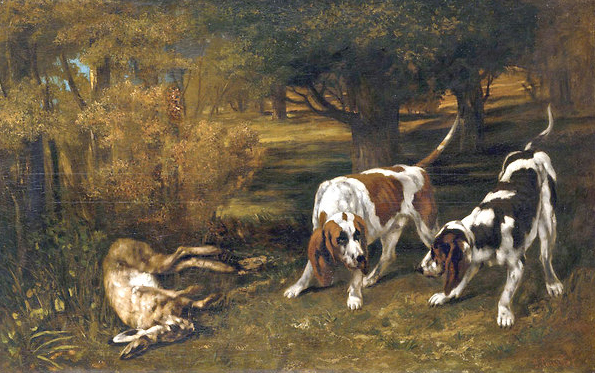
    In honor of the 136th Westminster Kennel Club Dog Show that starts on Monday, Randy Kennedy of The New York Times takes readers on a dog-art tour of New York City.  He has some nice picks spanning sevearal centuries, continents, and mediums, but my favorite aspect of his article is that he’s settled for me my own style guide quandary, something I’ve debated since I began this blog almost five years ago; dog-art has a hyphen.   Read Kennedy’s article Sit. Stay. Good Art.

    2.12.12 Update:  Oops.  Dog art is not automatically hyphenayted.  Thank you dog artist Leslie Moore for this clarification:

    A quick grammatical note from a recovering English teacher: dog art should be hyphenated when the two words are both adjectives modifying a noun, i.e. when Randy Kennedy describes New York City as a “dog-art town.” When the single adjective “dog” modifies the noun “art,” no hyphen is necessary.


    Boy_with_a_greyhound_paolo_veronese


    Boy with a Greyhound by Paolo Veronese, 1570s at The Met

    Miss_mary_edwards_william_hogarth


    Miss Mary Edwards by William Hogarth, 1742 at The Frick

    A_woman_with_a_dog_jean_honore_fragonard


    A Woman with a Dog by Jean Honoré Fragonard, 1769 at The Met

    Huntng_dogs_with_dead_hare_gustave_courbet


    Hunting Dogs with Dead Hare by Gustave Courbet, 1857 at The Met

    David_hockney_boodgie_and_stanley


    Boodgie and Stanley by David Hockney, 1993 at The Morgan Library & Museum

    Hat tip to my mom, and dog artists Barbara Grossman, and Natalie Timm for sending me links to this article.

  • Gainsborough Estimate: Almost $8 Million


    Gainsborough_Colonel_John_Bullock_f


    Portrait of Colonel John Bullock by Thomas Gainsborough, 1780s

    This Portrait of Colonel John Bullock by Thomas Gainsborough will be auctioned at Christie's Old Masters and British Paintings Sale in London on July 5.  It is estimated to sell for $5,596,500 – $7,995,000.

    I thought it only fair to include some Redcoat dog-love before I feature early American dog art tomorrow in honor of our Revolution.

    Via Christie's.

  • Tiepolo’s Saint Roch at the Philadelphia Museum of Art

    St_roch_tiepolo

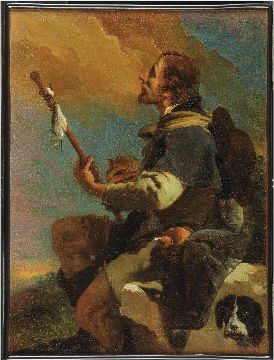
    Saint Roch by Giovanni Battista Tiepolo, 1730-35

    I did extensive research for the Saint Roch post on the November 1.  So I was surprised to find another portrait of Saint Roch by Giovanni Battista Tiepolo at the Philadelphia Museum of Art.  While I don’t consider this a great work of dog art, I think it is interesting as a Tiepolo, a Venetian artist famous for his dramatic Baroque style.  And the disembodied head of the dog speaks to composition challenges all dog artists face. 

    The Philadelphia Museum of Art has an excellent website that makes searching a pleasure, not always the case with art institutions.   Click here to view their collections.

    * Advertisement *


  • Cleveland Museum of Art: Where it All Began?

    The_thinker_cleveland

    The Thinker by August Rodin at the Cleveland Museum of Art.  Photo by Chris Auman.

    Some parents strap skis on their kids as soon as they can walk, and hit the slopes.  Mine hit the art museums.  Growing up in Cleveland, that meant I was exposed to some of the greatest art in the world at the Cleveland Museum of Art.  I have very clear memories of viewing works there and forming my tastes about art.  For example, at around age six I remember being bored by a Jean-Baptiste-Siméon Chardin exhibition.  I am still bored by him today.   I thought every town had a May Show that explored the boundaries of Contemporary Art.  I remember the vivid primary colors I used in my Saturday morning
    art class sculpture.  Those colors now decorate my home.  And maybe the 1971 addition designed by Marcel Breuer where the art classes were held explains my love for stripes

    Marcel_breuer_cleveland_museum

    The Breuer entrance to the museum designed by Marcel Breuer.  Photo by Heidi Strean.

    Last Friday, the museum hosted Dr. Edgar Peters Bowron for a lecture titled "Best in Show: The Dog in Art from the Renaissance
    to Today."  Dr. Bowron is also co-author of a book
    with the same title that I have featured here and used as a reference in my film "Dogs in Art".   In conjunction with the lecture, the museum posted some of their dog artworks on their website.  It got me thinking that even though we were a cat family and I didn't like dogs when I was young, this institution might have been where my passion for dogs in art all began.  Here are some highlights:

    Dog_watching

    Dog Watching, Song Dynasty, China 960 -1279
    Book_of_hours

    Book of Hours, France of Flanders, early 14th century
    Blindness_tobit_rembrant

    The Blindness of Tobit by Rembrandt, 1651
    Cushingura_storehouse_loyalty

    Chushingura: Act VII of the Storehouse of Loyalty by Kitagawa Utamaro, late 1790s
    Ludovic_lepic_dog_degas

    Ludovic Lepic Holding His Dog by Edgar Degas, 1889
    Woman_with_dog_ethel_mars

    Untitled (Woman with Dog from Back) by Ethel Mars, 1903 – 1908
    Dog_kiyoshi_saito

    Dog by Kiyoshi Saito, 1954

    I've said before that art matters. For some children, it might mean everything.

  • Charles Dickens’s Dog Collar Sells for $11,590!

    Charles_dickens_dog_collar

    Bonhams 28th Dog Art Sale just wrapped up and the most talked about piece, Charles Dickens’s leather and brass dog collar has surpassed expectations of its $4,000 – $6,000 estimate, selling for $11, 590.  The collar, engraved with the Victorian author’s name, C. Dickens, Esq., and address, Gad’s Hill, Place, Hingham, was featured in Bonhams’s catalogue with this article depicting Dickens’s fondness for his many dogs and, as in the case of General George Washington, his originality in naming them:

    ‘All animals which he took under his especial patronage seemed to have
    a marked affection for him. Quite a colony of dogs has always been a
    feature at Gad’s Hill. When Dickens returned home from his last visit
    to America, these dogs were frequently spoken of in his letters. In
    May, 1868, he writes: “As you ask me about the dogs, I begin with them.
    The two Newfoundland dogs coming to meet me, with the usual carriage
    and the usual driver, and beholding me coming in my usual dress out at
    the usual door, it struck me that their recollection of my having been
    absent for any unusual time was at once cancelled. They behaved (they
    are both young dogs) exactly in their usual manner; coming behind the
    basket phaeton as we trotted along, and lifting their heads to have
    their ears pulled,—a special attention which they receive from no one
    else. But when I drove into the stable-yard, Linda (the St. Bernard)
    was greatly excited, weeping profusely, and throwing herself on her
    back that she might caress my foot with her great fore-paws. M.’s
    little dog, too, Mrs. Bouncer, barked in the greatest agitation, on
    being called down and asked, ‘Who is this?’ tearing round and round me
    like the dog in the Faust outlines.”‘ James T. Fields, Atlantic, August, 1870

    And in case the Winter Olympics is not satisfying your need to indulge in nationalistic stereotyping, I offer you a few more dog collars to interpret based on nation of origin…

    Swiss_dog_collars

    Swiss dog collars, early 20th century.  Sold for $519.

    German_dog_collar

    Iron dog collar with protective spikes from Germany, 17th century. Sold for $1, 342.

    In the painting category, the star of the show, John Emms’s The Bitchpack of the Meath Foxhounds
    failed to realize its $500,000 – $700,000 estimate.  But it did sell for a respectable $482,000.  Given that another Emms painting, The New Forest Hounds, sold for the world record price of $842,250 in 2006, I’d say whoever purchased The Bitchpack got a great deal.
    The_bitchpack_of_the_meath


    The Bitchpack of the Meath Foxhounds by John Emms, 1896.  Sold for $482,000.

    See all the auction results here.

  • George Washington’s Dog Love

    George_Washington_dog

    George Washington was an avid hunter who bred and kept many dogs throughout his lifetime.  He also had a knack for original dog names: Taster, Tipler, Forester, Vulcan, Madame Moose, Searcher, and last but not least, my favorite — Sweet Lips.  I was searching for an image of Sweet Lips and the best I could find was this anonymous etching of Washington with one of his hunting dogs.  Along with it was this incredible story about our first president and his character.  I think it's way better than the Cherry Tree tale…

    Washington's affection for dogs is vividly illustrated in an incident
    that occurred during the Revolutionary War. It was when American forces
    were trying to contain British General William Howe's troops, who had
    occupied Philadelphia. During the Battle of Germantown, which was not
    going well for the Americans, Washington was encamped was encamped at
    Pennibecker's Mill.

    On October 6, 1977, a little terrier was seen wandering the
    area between the American and British lines. It turns out that General
    Howe's little terrier had somehow gotten loose and had become lost on
    the battlefield. The dog was identified from its collar, and brought to
    Washington. His officers suggested that he might want to keep the dog
    as a sort of trophy which might weaken the morale of the British
    general.

    Instead he took the dog into his tent, fed him and
    had him brushed and cleaned. Then, to the surprise of everyone,
    Washington ordered a cease fire. The shooting stopped and soldiers on
    both sides watched as one of Washington's aides formally returned a
    little dog to the British commander under a flag of truce.

    From an article by Stanley Coren, Ph.D. originally in Psychology Today.  I found it at The Poodle and Dog Blog.

    Happy Presidents Day!

  • Privately Held Gainsborough on View

    Gainsborough_Bullock

    Colonel John Bullock by Thomas Gainsborough, early 1770s,

    The Kimbell Art Museum in Fort Worth Texas is hosting a peek inside the private collections of Texas art collectors.  It looks like an intriguing show, one that includes some great pieces from Van Gogh and Munch along with the opportunity to see what some people are lucky enough to hang on their walls.  I've never seen this Thomas Gainsborough portrait of Colonel John Bullock from  in the private collection of Richard Drake of Houston.  I think it is exceptional.  Thank you for sharing, Mr. Drake.

    Stephen Becker of Art & Seek reviews the exhibition entitled "From the Private Collections of Texas" here.  Visit the Kimbell Art Museum for more information.

  • La Suprise! Lost Watteau Breaks Record!

    Watteau_la_suprise wp_IMG

    La Suprise, the long lost Jean-Antoine Watteau (1684-1721) that was discovered earlier this year in the corner of a British drawing room after missing for 200 years, sold at Christie’s this Tuesday for £12.36 million or $24.39 million.  This is a new world record Watteau and for any French
    master predating the advent of Impressionism in the 19th century.  (Click on image for larger view.)

    I think it’s the sweet little dog that pushed it over the top.

    Watteau_la_surprise_dog_2 wp_IMG

    Read full story about the Christie’s Old Masters sale here.