Category: 16th Century Dog Art

  • Vädersolstavlan: The Sun Dog Painting of Stockholm


    Vädersoltavlan_sun_dog_painting_stockholm


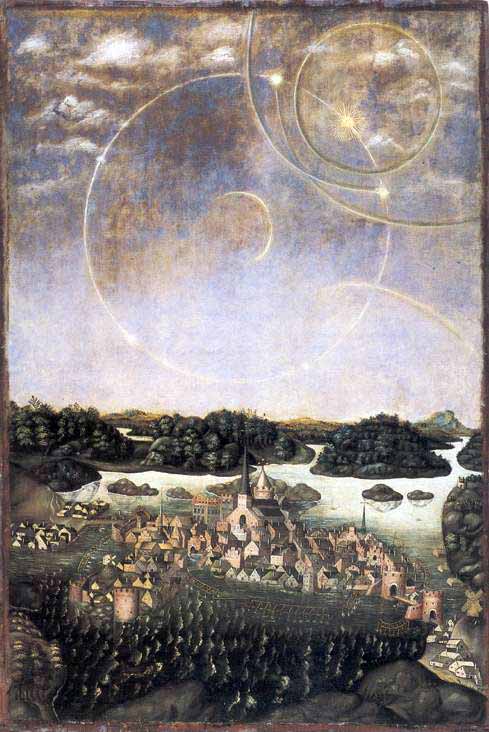
    Vädersolstavlan, The Sun Dog Painting of Stockholm, 1535

    A sun dog, or parhelion (plural is parhelia) which means “beside the sun” in Greek, is also called a mock Sun or a phantom sun. This is an atmospheric phenomenon that results to the manifestation of bright spots of light in the horizon. It usually appears in the form of a halo or a luminously brilliant ring on either side of the sun.

    Vädersolstavlan, The Sun Dog Painting of Stockholm depicts a two-hour sun dog episode from 1535.   It is considered the oldest image of Stockholm in color.  The artist is unknown and the original is lost.  This is an image of a 17th century copy.   Via 59 North.  More here.

    Enjoy the solstice and your sun dog.

  • Tim Storrier + Smudge Win the Archibald Prize

    Tim_storrier_smudge


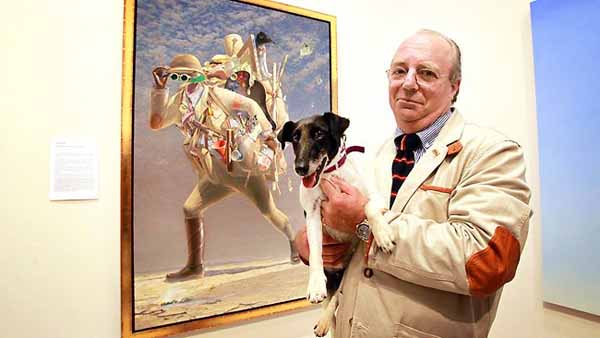
    Tim Storrier with Smudge and The Histrionic Wayfarer (after Bosch). Photo credit: Jane Dempster

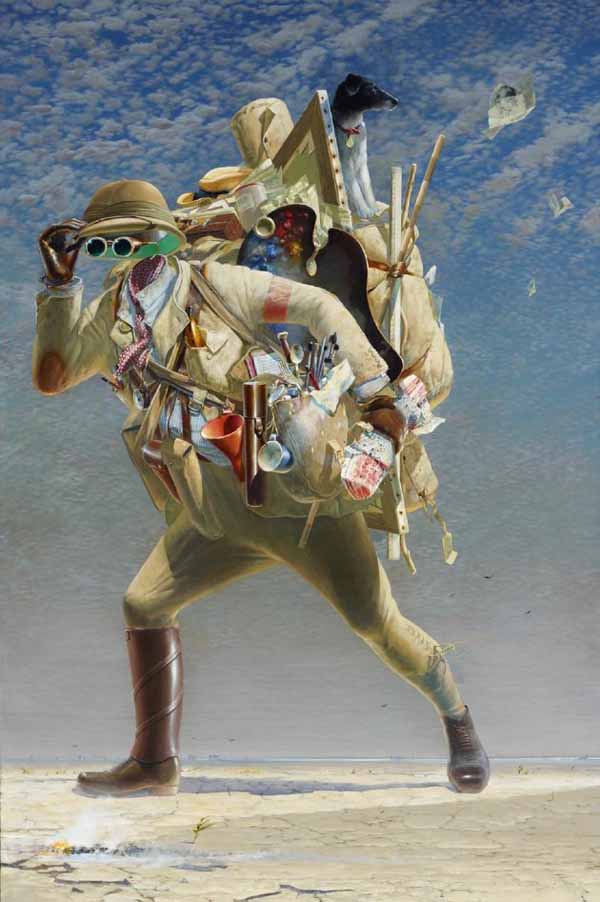
    Last week, artist Tim Storrier won the the Archibald Prize, Australia's most important portraiture contest established in 1921. He credits his dog Smudge with helping his faceless self-portrait take the top honors and $75,000 in prize money.  Read the full story at The Australian.

    Here is the prize-winning portrait…

    The_histrionic_wayfarer_after_bosch

    The Histrionic Wayfarer (after Bosch) by Tim Storrier

    Hieronymus_bosch_the_wayfarer


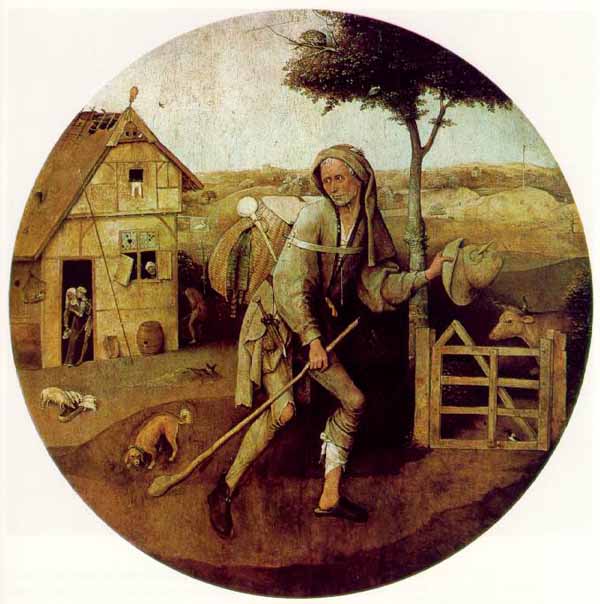
    The Wayfarer by Hieronymous Bosch, 1510

    See an interview with Tim Storrier and view all the finalists at The Sydney Morning Herald's website.

    Tim Storrier's website.

  • NYC Dog-Art Tour


    Howling_canine_metropolitan_museum_art


    Howling Canine, 5th or 6th Century Mexican Ceramic at the Met

    In honor of the 136th Westminster Kennel Club Dog Show that starts on Monday, Randy Kennedy of The New York Times takes readers on a dog-art tour of New York City.  He has some nice picks spanning sevearal centuries, continents, and mediums, but my favorite aspect of his article is that he’s settled for me my own style guide quandary, something I’ve debated since I began this blog almost five years ago; dog-art has a hyphen.   Read Kennedy’s article Sit. Stay. Good Art.

    2.12.12 Update:  Oops.  Dog art is not automatically hyphenayted.  Thank you dog artist Leslie Moore for this clarification:

    A quick grammatical note from a recovering English teacher: dog art should be hyphenated when the two words are both adjectives modifying a noun, i.e. when Randy Kennedy describes New York City as a “dog-art town.” When the single adjective “dog” modifies the noun “art,” no hyphen is necessary.


    Boy_with_a_greyhound_paolo_veronese


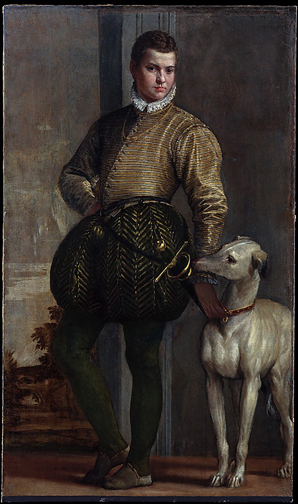
    Boy with a Greyhound by Paolo Veronese, 1570s at The Met

    Miss_mary_edwards_william_hogarth


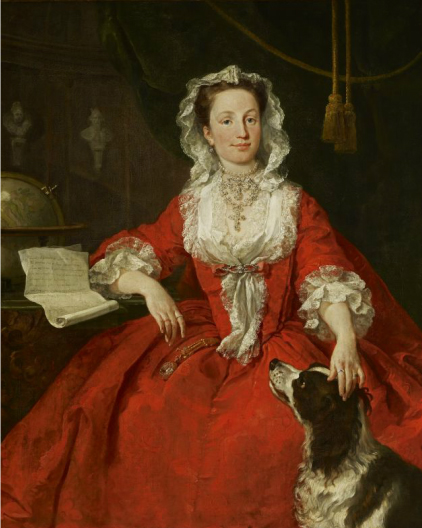
    Miss Mary Edwards by William Hogarth, 1742 at The Frick

    A_woman_with_a_dog_jean_honore_fragonard


    A Woman with a Dog by Jean Honoré Fragonard, 1769 at The Met

    Huntng_dogs_with_dead_hare_gustave_courbet


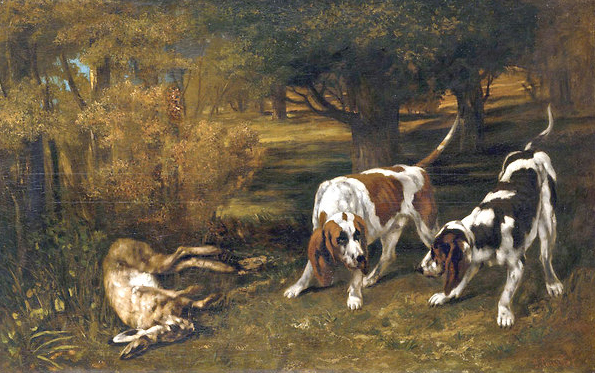
    Hunting Dogs with Dead Hare by Gustave Courbet, 1857 at The Met

    David_hockney_boodgie_and_stanley


    Boodgie and Stanley by David Hockney, 1993 at The Morgan Library & Museum

    Hat tip to my mom, and dog artists Barbara Grossman, and Natalie Timm for sending me links to this article.

  • Melencolia I by Albrecht Dürer


    Albrecht_Dürer_melencolia_I


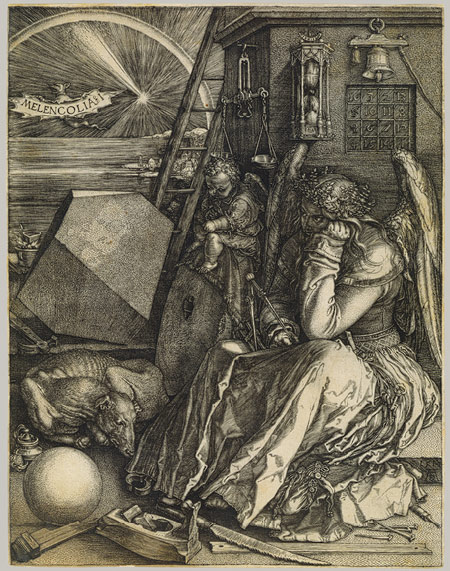
    Melencolia I by Albrecht Dürer, 1514

    I went to our local shelter today.  It is a no-kill rescue.  The dogs are walked twice a day.  The cats are petted and cared for.  I gave one little guy a bath because he had soiled his crate.  I threw away a clump of his hair with feces on it in a garbage can that held dog food.  They had to throw away all the dog food.  A convict washed out the can with Clorox.  

    I took the little dog for a walk outside.  His backend is wonky, but he got going.  I kept him away from a Pit Bull, but I was frightened.  I brought him back inside, put him back in his crate, and started to fill out an application.  I didn’t finish it. 

    I left, and Romeo and Juliet smothered me with kisses on the way to the path.  I knew I was allergic to them.  But I let them.  They need to be adopted together because she cannot survive without him.  Her heart is too big and she has a murmur.  I came home and took a Benadryl and a shower.  Everyone says, “You’ll know when it’s your dog.”  I believe that.  But I am having trouble with knowing they are not my dogs.  I have been sheltered.

    Via The Metropolitan Museum of Art.

  • Leonardo da Vinci: Dog Artist

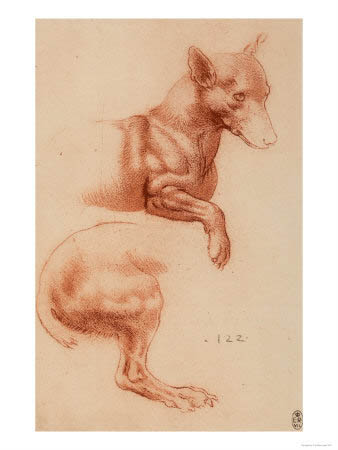
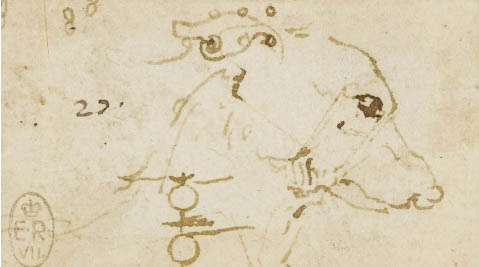
     ***Correction***  I orignially wrote that Study of a Pomeranian was by Leonardo da Vinci, because it's sold all ove the Internet that way.  But a little research revealed it is actually attributed to Francesco Melzi.  But, scroll down and you will see The Head of a Dog that was made by Leonardo da Vinci in 1497.  I think it looks a little like Darby.   I hope it was a sweet companion and not a specimen on his dissecting table.


    Leonardo_da_vinci_study_pomeranian


    Study of a Pomeranian by Francesco Melzi  1510 – 1520

    Head_of_dog_leonardo_da_vinci


    The Head of a Dog by Leonardo da Vinci, 1497

    I've lived in Florence.  I've studied a tremendous amount of Renaissance art and history.  I had no idea Leonardo da Vinci was a dog artist.

    If you don't have anything to do today, visit the Windsor Royal Library's online collection of 825 Leonardo da Vinci sketches.  Mind-blowing.

    Have a great weekend.


  • The Peddler by Hieronymus Bosch

    The_peddler_hieronymous_bosch


    The Peddler by Hieronymus Bosch, 1500

    I recently bought a used book of Hieronymus Bosch paintings.  There are lots of dogs and dog-like creatures to be found in his intricate works.  Totally inspiring.  Brilliant composition and detail from the artist I consider to be the father of Lowbrow.

  • Venus and an Organist and a Little Dog by Titian


    Venus_organist_and_little_dog_titian


    Venus and An Organist and a Little Dog by Titian, 1550

    Happy Valentine’s Day!

    I never loved Titian so much as when I started noticing his dogs.  See more of his dog art masterpieces here and here and here and here.

  • Dog Painting Newly Attributed to Pieter Bruegel the Elder


    Wine_of_st_martins_day_bruegel_the_elder


    The Wine of St. Martin's Day, 1565, was recently attributed to the master Flemish painter, Pieter Bruegel the Elder.    Micheal Kimmelman of the New York Times looks at why labels matter when it comes to art.

    Click on image to see larger version.

  • Albrecht Dürer’s Saint Eustace Sells for $216,132

    Albrecht_durer_st_eustace

    Saint Eustace by Albrecht Dürer, 1501

    Last night in London at Christie’s Old Masters Print Sale this Albrecht Dürer engraving of Saint Eustace was estimated to sell for $122,160 – $183,240 (£80,000 – £120,000).  It exceeded expectations and sold for $216,132 (£145,250).

    I love the beautifully rendered Greyhounds and the thin veneer of Christianity applied to this pagan scene — Christ appearing as a stag.

    Christie’s lot notes provide the the full story of Saint Eustace, the patron saint of hunters, and insight into the 16th century battle of sculpture vs. paintings.  As far as Greyhounds goes, I think Dürer wins this round. 

    This, largest of all Dürer’s engravings, has always been considered one of his finest. According to the legend Placidus, a general under Emperor Trajan, was out hunting one day when Christ appeared to him in the shape of a white stag which had a radiant crucifix between its antlers. This vision prompted his conversion to Christianity, and he was baptised Eustace. As the patron saint of hunters and one of the Fourteen Holy Helpers he was one of the most popular saints of the 15th and 16th Centuries.

    As an artist for whom the study of nature was paramount, the subject of the stag hunt in the forest offered Dürer an opportunity to display his consummate skill in the representation of animals, plants and landscape. Since Leonardo’s writings on the subject – the so-called Paragone – the question of the supremacy of the different artistic media was one of the great disputes in the theory of art and was reiterated in various tracts throughout the 16th Century. One argument in favour of sculpture was that it allowed the artist to show a figure three-dimensionally and from different angles at the same time. By demonstrating that this could also be done in two dimensions painters tried to invalidate this argument.

    One of the most admired and best-loved elements in Dürer’s printmaking are the greyhounds in the foreground of the present composition, and commentators cited them as proof of the parity of painting and sculpture, such was the effectiveness with which they were described.

    Via Christie’s.
  • St. Roch: Dogs, Frogs, Invalids, and Bachelors


    Jacopo_tintoretto_st_roch_curing_plague

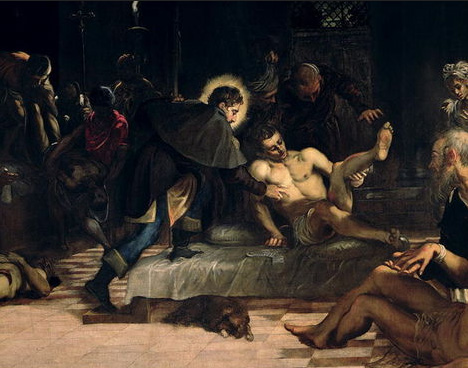
    St. Roch Curing the Plague by Jacopo Tintoretto, 1560 (close up)

    Christians celebrate November 1 as the Feast of All Saints.  But I like to dedicate today to St. Roch, the patron saint of dogs.  St. Roch is also the patron saint of invalids, bachelors, surgeons, tile makers, and cattle disease.

    According to legend, St. Roch was born in Montpellier, France 1295 to a wealthy family, but he gave away all his earthly possessions at age 20 when both his parents died.  He then traveled to Rome where he began attending to the sick.  Soon he became known for miraculously curing people by making the sign of the cross on them.

    When he became ill, he was expelled from the city and made a hut of leaves and branches in the forest (I suspect this is where his patron of bachelors status came from). There, a dog belonging to a nobleman brought him bread and licked his wounds, eventually healing them. One day, the nobleman followed his bread-carrying dog, discovered Saint Roch, and became his acolyte.   St. Roch ultimately died in prison in 1327 (his unscrupulous uncle put him there and Roch refused to give his true identity to avoid worldly glory) before the Black Plague ravaged Europe from 1347 – 1349.  But his story survived and a rich iconography developed around him during those terrifying times.

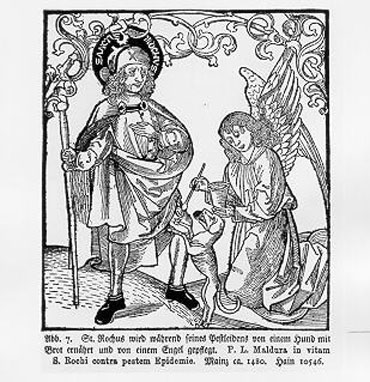
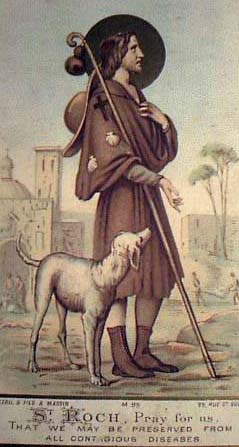
    Here are some works depicting St. Roch. Not all include dogs, but I thought they were interesting.


    St._Roch_2

    Medieval rendering of St. Roch

    St_Roch


    St. Roch prayer card, date and artist unknown

    Weston_st_roch_cemetery


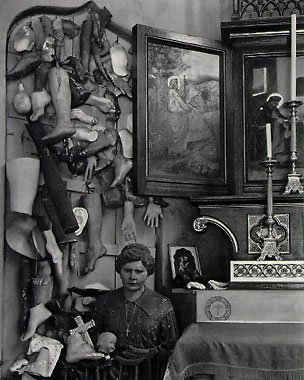
    Photo of St. Roch Cemetery in New Orleans by Edward Weston, 1941

    St_roch_statue


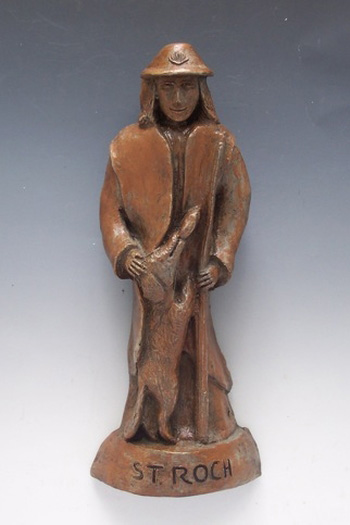
    St. Roch statue by Hank Schlau


    St_+Roch


    St. Roch and the Plague of the Frogs by Jacquelyn McBain


    P.S. St. Roch in Italian is St. Rocco, which sounds cooler to me.